The challenge before us is: how can we build and prioritize these intercultural and inter-epistemic, democratic, and pluriversal dialogues, over the monopoly of the Euro-Western canon? How can we foster a critical interculturality that promotes the emancipatory values of cognitive, racial, and social justice? (Reis, 2022, p. 9)
These questioning words of Brazilian Black scholar Diego Reis have echoed in my mind, as they represent the paradigmatical complexities for teaching and researching in contexts/identities like mine. Especially as a teacher and as an aspirant educational researcher, that challenge has been a path to follow and an issue to address. Let me start by saying that being an educator nowadays is an arduous journey, which would add nothing to our reflection, as the struggles of schools and teachers worldwide are well known to anyone who has read anything about today’s educational settings. Of course, most of the crises we face are related to the colonial structures of societies and institutions, the impositions from neoliberalism in our existences, and from the ongoing imperialist dominations over the world.
That said, I do not aim to provide solutions or to say how to overcome all of those issues. The meanings and practices of resistance, for me, are becoming increasingly focused on transforming what is around me, my contexts, and what I can touch. And it is because of that perspective that finding Dr. Adeela Arshad-Ayaz on my path was a significant experience in identifying concrete ways to decolonize the teachers’ education process as a whole. In this sense, this article presents an experience report of the time I spent in a course taught by her, as a way of pointing out where the Teacher Education spheres should walk towards.
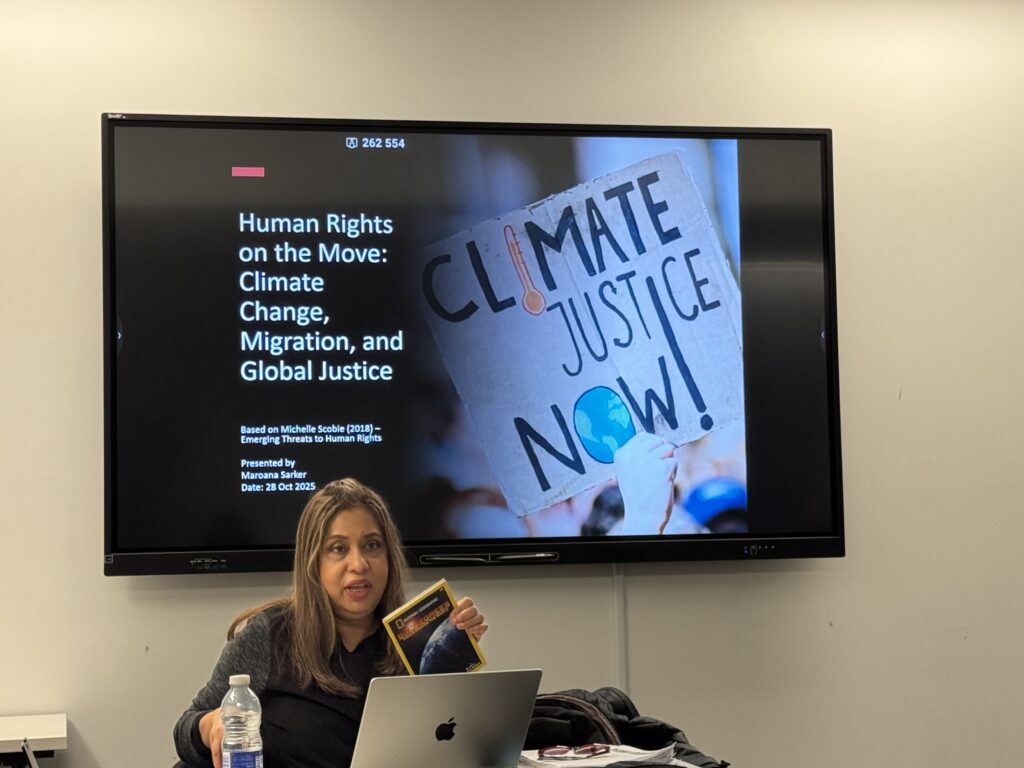
Beyond the epic and (s)heroic stories of Western literature, highlighting efforts to transform academia, for me, means answering Reis’ question about how to foster critical interculturality, as it currently encompasses a range of topics related to human rights, from environmental issues to social inequalities. Topics that, in general, are not present in courses for pre-/in-service teachers and are far from our everyday debates. Many historical and cultural processes can explain this absence, but in educational settings, the “discomfort” they bring is one of the primary cognitive and affective reasons they are often ignored. Something we learned in the initial classes from an article that presented the concept of pedagogy of discomfort, which consists of “challenging educators and students to critique taken-for-granted assumptions of peace and global citizenship, and to rethink what citizenship and peace might be” (Kester, 2023, p. 51). As we know, dismantling alienation requires the commitment to mobilization, which is extremely hard to obtain/develop/teach.
With the constant changes in the way people learn and become aware nowadays, using different approaches and languages is crucial, not following the “innovative” trends in education, but actually re-imagining what teaching and learning processes are. This, of course, is reflected in Professor Adeela’s essentially interdisciplinary approach and experience, which led her to produce a documentary on hate speech and social media, addressing her own students’ experiences and perceptions, and engaging academic experts.
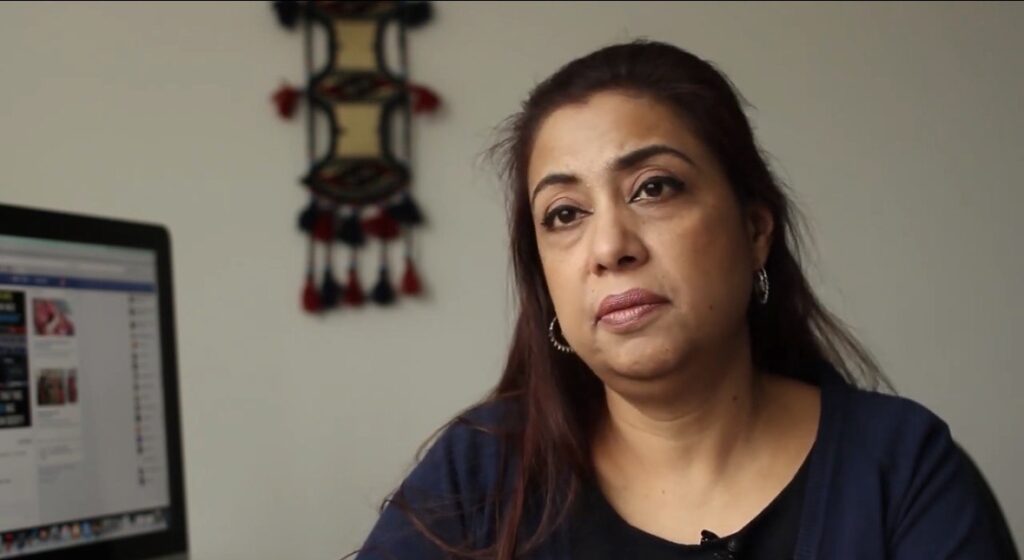
The use of documentaries, very present in Dr. Adeela’s classes, is an approach that offers a particular way to sensitize people to reflect on complex topics. Adapting how we communicate knowledge in class is crucial. In this sense, we need to realize that teaching and learning go beyond technique; they have an ethical dimension that is crucial to understanding whether we are perpetuating or challenging unequal structures through our actions, perspectives, and work as teachers. Through those actions, she’s bringing to class different issues faced by communities around the world and fostering discussions in which students learn from each other’s perspectives and understandings.
I still remember the expressions and feelings that the documentaries she brought to class provoked in us. In a way that only art and subjective narratives can do, there we were reflecting on our own identities and trajectories, and on their intersections with those of other peoples, contexts, societies, and cultures.
In a world where superficiality has become the rule, subjective and critical approaches are now facing the challenge of going deep, and of making students go deep as well by understanding, for example, the ontological and epistemological foundations of everything we do in our field. From where I come from, many educators who educate educators constantly point the finger (and sometimes blame) teachers for not being aware of social problems and for not addressing specific topics in class. It’s a fact: in most cases, there’s a political choice behind the silence and lack of approaches. The alienation perpetuated by colonialism and coloniality cannot be easily overcome, especially for those who have lived with privileged identities.
Still, in other cases, the lack of mobilization is due to the constant pressure, overload, and internal/external challenges faced by those in schools and institutions that belong to a system set to prevent/discourage mobilization, humanization, and critical thinking/actions.
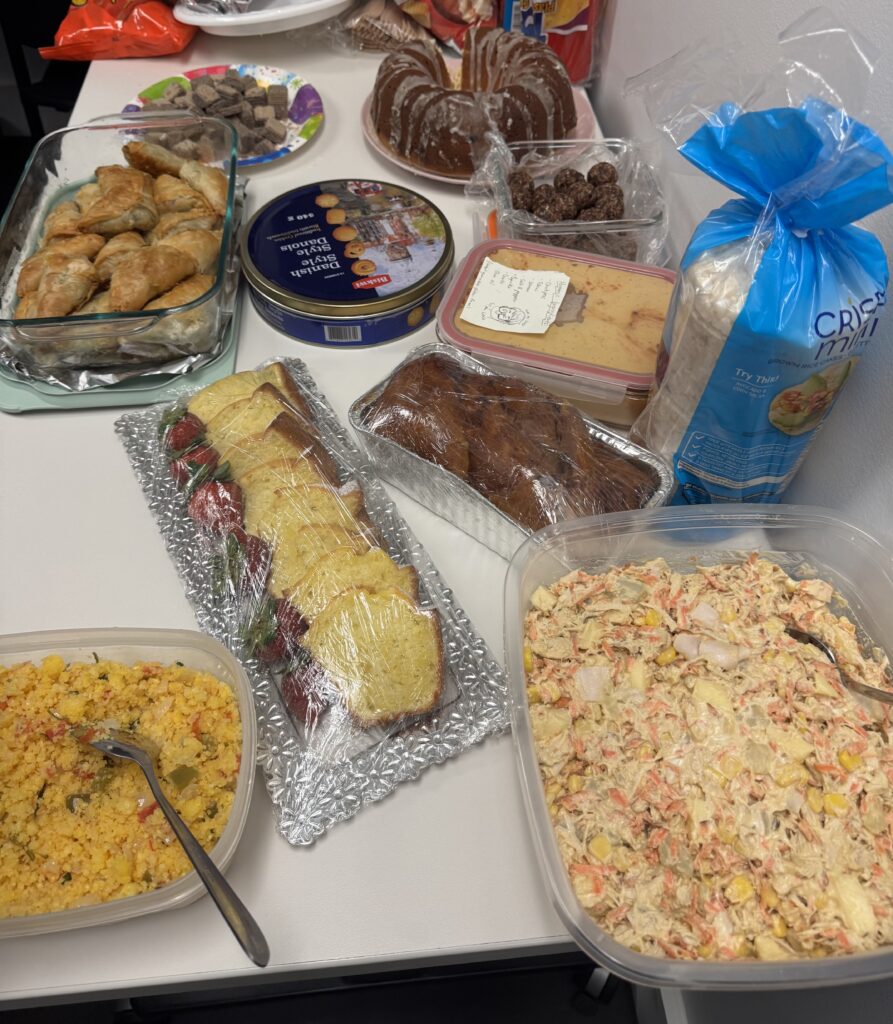
And of course, her humanist approach to the course goes beyond the topics studied, but it is also related to the way she makes the classroom a space for many possibilities, as bell hooks reflects. Sharing with and truly hearing students-teachers is a powerful tool for empowerment. It means to embody the dialogical approach that Freire proposes. Providing an equal class environment for students-teachers is to teach them by practice what democratic and engaged pedagogy means, so they can reflect on their own ways of conducting their classes.
What decoloniality requires of educational research and teaching goes beyond theory; it is more about how we establish classroom environments and the objectives/intentionalities we set as teachers. Decolonizing methodologies encompass diversity, political compromise, and the amplification of marginalized voices.
To (not) conclude these reflections and actions sharing, I return to the ideas and practices of pedagogical disobedience to summarize what I have presented here. One of the many dimensions of resistance is sometimes these very simple decisions made by those who understand the urgency of change. Decisions on the course plan, on the topics to be discussed, on the literature to be analyzed, on how to assess students, and, most importantly, how to raise critical awareness. In this sense, sharing the resistance of people like Dr. Adeela is a way of noticing what is already being made, and how to start doing. The souths on the north, constructed hardly through years of internal and external challenges, are the hope that the struggle will always take us somewhere.
In summary, denouncing what is missing in academia is essential, but so is highlighting the efforts of those who have paved the way for us.
References
`Kester, K. (2022). Global citizenship education and peace education: Toward a postcritical praxis. Educational Philosophy and Theory, 55(1), 45–56. https://doi.org/10.1080/00131857.2022.2040483
Reis, D. D. S. (2022). A colonialidade do saber: perspectivas decoloniais para repensar a univers(al)idade [The Coloniality of Knowledge: Decolonial perspectives to rethink the univers(al)ity]. Educação & Sociedade, 43, e240967. https://doi.org/10.1590/ES.240967