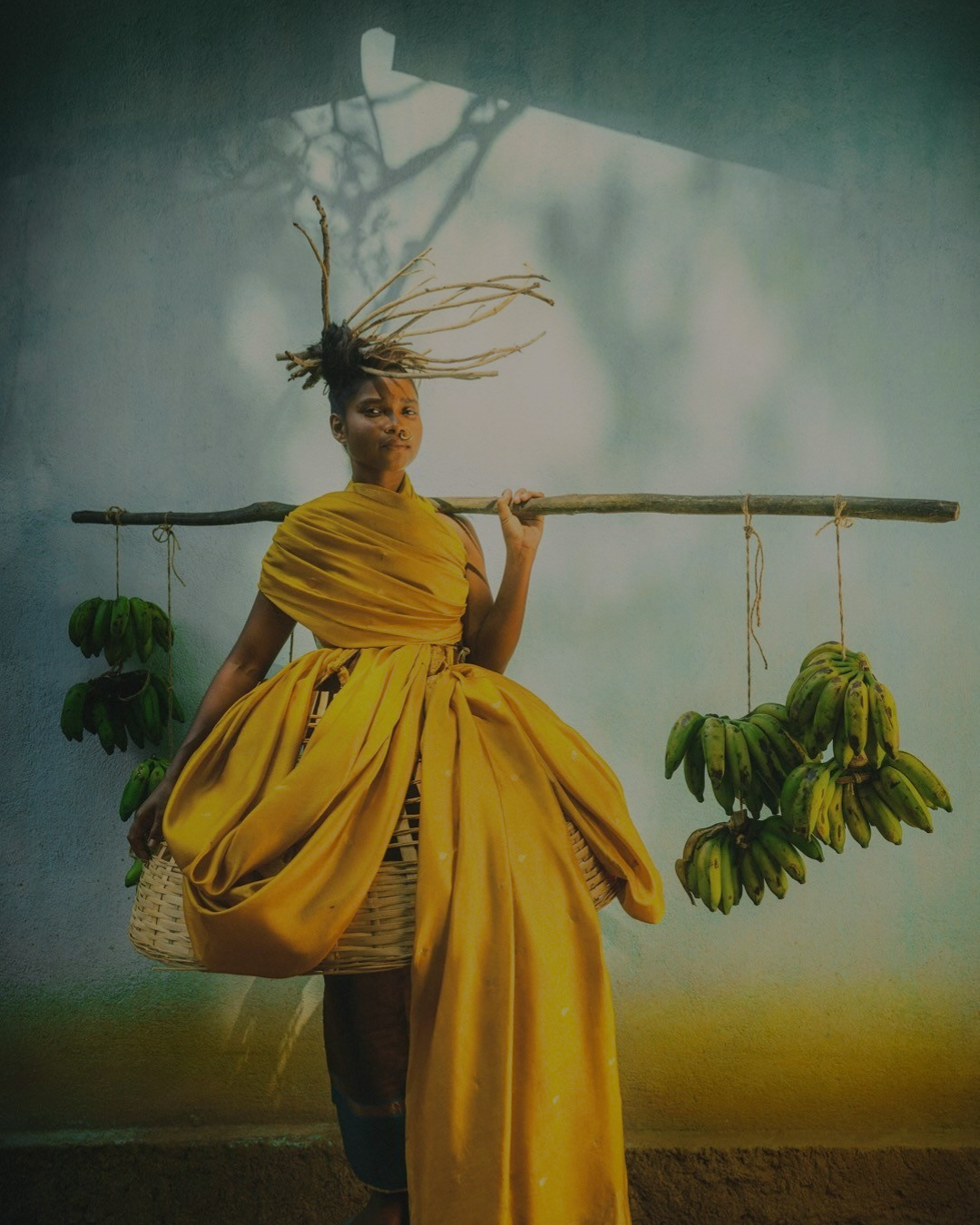

This column critiques cultures and philosophies using an A-versus-B method—not to engage in absolutism, but solely for contrast. Through my practice of Existencia and multidisciplinary investigation, we examine cultures, philosophies, and notions in this way to show the difference between how some of us have lived and moved through the world and the philosophies and ways of life we can choose to adopt.
If linear time teaches us to move forward at all costs, cyclical and vertical time ask something else entirely: to return, to ascend, to remember.
In the last edition of my column, we traced how linear time shaped Western thought, labor, capitalism, and extraction—how it disciplined bodies, reordered nature, and taught us to equate worth with output. But linear time is not the only way time has ever been understood. It is not the only way we have lived. And it is not the only way we can move forward.
Before clocks governed our days and deadlines shaped our sense of self, time was relational. It lived in seasons, rituals, breath, and memory. It moved through the body. It circled back on itself. It deepened rather than advanced. Cyclical time did not demand constant growth; it honored return. Vertical time did not rush forward; it invited depth.
This section is not about rejecting linear time entirely. We still live inside it. We still negotiate with it. This is about remembering other temporalities that exist alongside it—and within us. Ways of being with time that are ancestral, embodied, and spiritual. Ways that recognize birth and death as recurring energies, not endpoints. Ways that understand rest as intelligence and stillness as movement.
If Part 2.1 asked how we arrived here, Part 3.1 asks a different question: What becomes possible when we stop treating time as something to conquer—and begin relating to it as something we belong to?
From here, we move inward. We move downward. We move in circles. And we begin again.
I am at my most creative, my most innovative, when I am well-rested. When I am just experiencing life. When I am feeling—fully and without apology—even in the midst of all the chaos the world is handing us. Rest is not the absence of work. It is a condition for the kind of work that actually matters.
And to be honest, it is not as though the world has ever stopped being chaotic, right? That is important to remember. It is not that things are worse than they have ever been—it is that because of social media and the gravity of where we are, everything feels unprecedented. It is that the illusion of the world we so firmly believe is crumbling and so we think it to be the end of times. But that is a lie we have been fed. Our ancestors experienced things we cannot fathom. They survived them, transmuted them, and deposited those survival strategies somewhere in us. Just as we are experiencing things they could not have imagined, they were navigating storms they could not have predicted—and they found their way through.
So when I encourage you to join the practice of Existencia—to be still, to allow yourself to simply be—it is not just to recharge your spirit, your body, and your mind. It is also to create room for what wants to come through. Creativity does not arrive on demand. It arrives in spaciousness.
Not long ago, I was sitting with a friend—the kind of conversation that starts in one place and ends up somewhere you did not expect. We were talking about a video game: Death Stranding, the 2019 work by Hideo Kojima. The game follows Sam Porter Bridges, a man who cannot die, tasked with traversing a shattered America to deliver packages and rebuild human connection in a world where the veil between the living and the dead has been torn open. Beached Things—spirits caught between worlds—haunt the landscape. Contact between the living and the dead causes voidouts: catastrophic explosions that erase whole regions. Isolation is both the disease and the danger.
Kojima has said that the game’s central message is simple: let’s connect. We are headed for disaster if we do not.
From there, we moved into stranger territory. What makes a body decompose? Fungi. What do fungi produce? Mycelium—the vast underground networks that connect trees, plants, and organisms through webs of chemical communication invisible to the naked eye.
Then we arrived at psychedelic mushrooms. How taking them can feel, at times, like downloading information. As if something is being transmitted. As if you are being briefly patched into a system much older and larger than yourself.
I want to sit with that image.
Mycologist Merlin Sheldrake, in his book Entangled Life (2020), describes mycelium as a kind of planetary connective tissue—a network that communicates without a central nervous system, distributes resources, and operates through interdependence rather than hierarchy. Ecologist Suzanne Simard’s research at the University of British Columbia revealed what she calls “Mother Trees”—the largest, oldest trees in a forest that function as nodes in mycorrhizal networks, sending nutrients and chemical signals to younger trees, including their own offspring. The forest does not compete to survive. It shares. It supports. It remembers who needs what.
What if community is mycelial?
What if the knowledge that gets passed through generations—through stories, through food, through ritual, through touch, through genes—is not metaphor but mechanism? What if the wisdom of our ancestors is not somewhere out there, abstract and inaccessible, but is literally, biologically encoded in our cells, waiting to be activated?
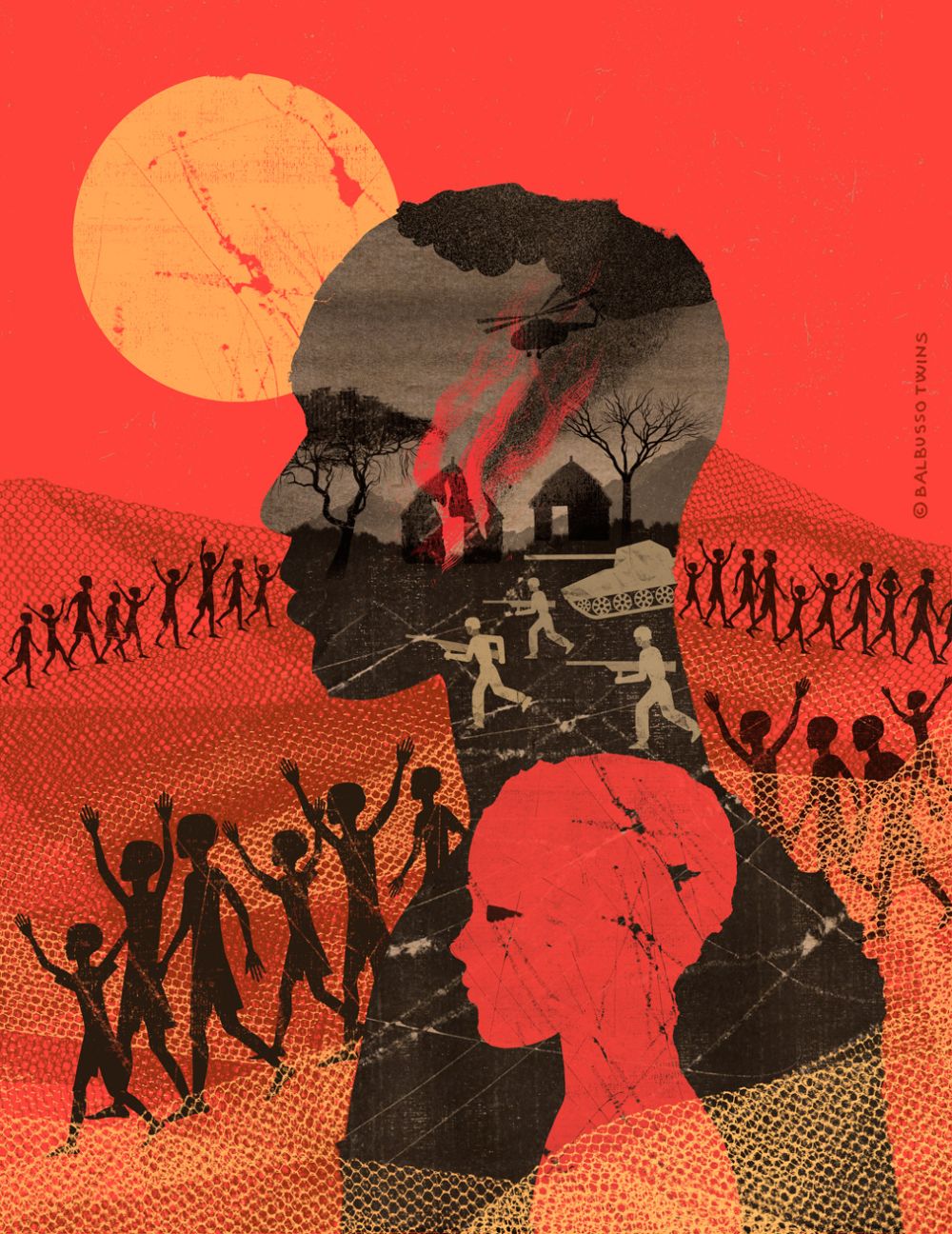
Dr. Joy DeGruy coined the theory of Post Traumatic Slave Syndrome (PTSS), which she defines as “a condition that exists when a population has experienced multigenerational trauma resulting from centuries of slavery and continues to experience oppression and institutionalized racism today.” It names something many of us already feel in our bodies: that trauma is not only lived, it is inherited. And for those who carry both—the trauma passed down through generations and the trauma they have lived themselves—it is more pervasive still.
In a racialized world like the one we live in, Black people and non-Black Indigenous people carry epigenetic inheritance, ancestral trauma, and ancestral memory. And often, when we talk about what we carry from our ancestors, we focus on the trauma. No one is saying we shouldn’t—that trauma is something to be healed, to be looked at, not looked away from. But it is only part of the story.
This is where neuroscientist Rachel Yehuda’s research becomes essential alongside DeGruy’s. Yehuda’s work on epigenetic inheritance—specifically studying Holocaust survivors and their children—demonstrated that traumatic experiences alter gene expression in ways that can be transmitted across generations. Children of survivors showed measurable changes in the FKBP5 stress gene, even when they had not personally experienced the trauma. Trauma leaves a biological residue.
The work of these two researchers on epigenetics, and its impact on our decision-making, our health, our lives, shows that the past isn’t just the past. It is the present and the future. Everything our ancestors survived is stored in our genetics, in our ancestral memory. And alongside it, so is the wisdom that carried them through—the tenacity, the audacity to dream bigger. There is no living in this current reality without the genetic markers we inherited from our ancestors. Everything is happening at the same time. Cue Everything Everywhere All at Once.
But here is what often gets left out of that conversation: so does resilience. So does love. So does wisdom. The same mechanisms that carry the wound also carry the medicine.
Here is where I want to connect something that might not seem connected: our relationship to time and our growing capacity for apathy.
From a more linear standpoint, we see our missions as individual—our soul’s purpose, our life’s purpose—not our collective life purpose or collective responsibility. Purpose becomes property. Achievement becomes private. And when purpose is privatized, so is suffering.
We are witnessing the growth of apathy. Compassion fatigue. The feeling of overwhelm that makes it easier to scroll past a crisis than to sit with it. Susan Sontag, writing about the power of images to document suffering, observed that “compassion is an unstable emotion. It needs to be translated into action, or it withers.” The media ecosystem of urgency, designed to keep us in a state of perpetual reaction, erodes our capacity for sustained care. When everything is breaking news, nothing is.
Cultural theorist Charles Figley identified compassion fatigue as the particular exhaustion that comes from prolonged exposure to others’ suffering. Originally studied in caregivers and first responders, it is now recognized as something that affects anyone immersed in a constant stream of trauma. And we are all immersed. Our phones deliver it in real time. There is no before or after anymore—only an endless present tense of crisis.
This is not a coincidence. This is the logical outcome of linear time married to extractive technology.
In the words of bell hooks, “How do men and women, boys and girls, live lives of compassion, justice and love? And I think that’s the visionary challenge for feminism and all other progressive movements for social change“.
When we engage with time from a linear perspective, every moment must produce value or be lost. The news cycle must be fed. Attention must be captured and monetized. Social media is not a mycelial network—it is one designed to extract rather than reciprocate. The original mycelial network, as Sheldrake and Simard describe it, is mutual: resources flow toward need. Our digital networks route resources toward engagement, outrage, and virality. They mimic connection while undermining the conditions for it.
We don’t just inherit trauma. We also inherit the accumulated wisdom encoded across hundreds of years—wisdom stored in our DNA and in our community’s DNA. But apathy cuts us off from both. As apathy grows, we lose the opportunity to tap into that lineage. And that loss is not incidental. It is a feature of a system that depends on our disconnection.
So what does an alternative look like?
Cyclical time tells a different story than linear time. It does not rush toward an endpoint. It returns. It repeats. It remembers. Agricultural societies have long organized life around cycles—seasons, harvests, rest. Many spiritual traditions do the same. In Hinduism and Buddhism, existence unfolds through samsara: cycles of birth, death, and rebirth shaped by behavior and awareness, not accumulation. The goal is not constant improvement but liberation from attachment.
Robin Wall Kimmerer, a Potawatomi botanist and the author of Braiding Sweetgrass, writes about the grammar of animacy—the way Indigenous languages like Potawatomi understand plants, animals, water, and land as living beings deserving of relationship, not resources to be extracted. Time, in this framework, is not a line to be traversed but a web to be tended. The harvest is not a transaction; it is a conversation. You take, and you give back. You come around again.
Vine Deloria Jr., the Standing Rock Sioux scholar and philosopher, argued that Western European identity is built upon linear time and historical progress—and that this temporality is itself a tool of colonial domination. Indigenous epistemologies, he observed, are spatially oriented and cyclically arranged: grounded in local place, communal relationship, and the turning of seasons rather than abstract historical progression. To colonize land was also to colonize time—to replace the rhythm of the land with the rhythm of the market.
This is what I mean when I say that cyclical time honors return. It does not treat the past as obsolete. It does not privilege the new at the expense of the enduring. It understands that everything that has been will come around again, transformed—and that the wisdom embedded in what came before is not behind us but beneath us, available if we know how to listen.
In cyclical time, death is not an ending. It is a turning. A seed composted becomes soil becomes new growth. A body returned to earth feeds the mycelium, and the mycelium feeds the forest. Nothing is wasted. Nothing is truly gone.
When I think about linear versus cyclical versus vertical time, I notice that societies that move through cyclical and vertical understandings of time tend to have a stronger connection to something I believe we have almost forgotten: that we are all here on this earth at the same time for a reason.
Yes, we have individual purposes. But we also have collective ones. We have societal purposes we are meant to accomplish together. And that does not diminish our differences. Because of social constructs—race, class, the lived realities of who is harmed and who is protected—we all move through the world differently. That is real. That is material. And it matters enormously. But our differences do not make the collective purpose disappear. They make it more complex, more necessary, and more urgent.
Individualism, linear perceptions of time, and the competition embedded within growth—especially growth under capitalism—have shifted us. We have become siloed. The pandemic accelerated this. What began as a forced pause—a cyclical rupture inside a linear system—became, once it was declared “over,” a return to hyper-individualism at warp speed. A collective confrontation with mortality that could have changed us. Did we return to linear time too quickly? I think we did.
And then consider what has been layered on top: the Uber economy. The DoorDash world. A life in which you can go days without leaving your home, without looking a stranger in the face, without brushing against the unpredictability of another human being. Your groceries arrive. Your news arrives. Your coffee arrives. Your entertainment arrives. Everything delivered through a screen, in the palm of your hand.
Convenience is not neutral. Every degree of friction we remove from our daily lives also removes an opportunity for unexpected connection. The mycelial network does not thrive through efficiency, it thrives through contact. Through the slow, patient exchange of sugar for mineral, the accumulation of relationship over time. We are engineering those moments out of existence. And we are wondering why we feel so alone.
There is a phrase I keep returning to: the mycelium does not simply connect what is living. It connects the living to what has died. Decomposition feeds the network. The dead feed the living. What we call an ending is, in the mycelial worldview, a form of transmission.
I believe that is what we are being called back to. Not to romanticize the past—not to pretend that the wounds of colonization, of slavery, of displacement and erasure are anything other than what they are. But to remember that those wounds were survived. That survival carried information. That the people who survived them were not diminished by what was done to them—they were deepened. They became root systems.
And we are still connected to them.
When I experience creativity that feels like it comes from somewhere beyond me—when I access a knowing I cannot trace to any book or teacher—I do not dismiss it as coincidence. I recognize it as inheritance. As the mycelium of my lineage feeding me exactly what I need, delivered through paths I cannot fully see.
This is what cyclical time restores to us: the knowledge that we are not starting from scratch. That every ancestor who prayed, who resisted, who loved, who planted, who sang in the dark, was depositing something into a network that still reaches us. We are not only individual nodes, we are also the continuation of something much older than ourselves.
What becomes possible when we remember that? What becomes possible when we stop treating time as something to conquer—and begin relating to it as something we belong to?
Before you leave this piece, I want to offer something embodied. Find stillness. Not the kind that waits for the next thing. The kind that is willing to descend.
Take a breath in. A breath out. Let the breath do what it knows how to do. And then ask yourself—not to answer immediately, but to carry:
What wisdom is already in my body that I have not yet claimed?
Who do I carry with me, even when I do not name them?
What would it mean to act not only from my individual purpose—but from my collective one?
These questions are not linear. They do not need to be resolved. They need to be lived. To form part of this practice and explore Existencia via meditations, somatic exercises, and more, subscribe to
Who benefits from your current relationship to time?
What becomes available—in your body, your creativity, your community—when you slow down?
If the wisdom of your ancestors were a mycelial network, what would you be nourishing today that they might access tomorrow?
For those who want to sit longer with the ideas explored in this piece, the following texts offer deeper context across mycology, epigenetics, Indigenous philosophy, media theory, and the study of time:
On Mycelial Networks and Biological Communication
Sheldrake, Merlin. Entangled Life: How Fungi Make Our Worlds, Change Our Minds, and Shape Our Futures. Random House, 2020.
Simard, Suzanne. Finding the Mother Tree: Discovering the Wisdom of the Forest. Alfred A. Knopf, 2021.
On Epigenetic Inheritance and Ancestral Memory
DeGruy, Dr. Joy. Post traumatic slave syndrome: America’s legacy of enduring injury and healing. United States: Joy DeGruy Publications.
Yehuda, Rachel. “How Trauma and Resilience Cross Generations.” On Being with Krista Tippett. November 2017.
On Indigenous Temporalities and Cyclical Time
Kimmerer, Robin Wall. Braiding Sweetgrass: Indigenous Wisdom, Scientific Knowledge, and the Teachings of Plants. Milkweed Editions, 2013.
Deloria, Vine, Jr. God Is Red: A Native View of Religion. Fulcrum Publishing, 1973.
On Compassion Fatigue and Media Saturation
Sontag, Susan. Regarding the Pain of Others. Farrar, Straus and Giroux, 2003.
Figley, Charles R. Compassion Fatigue: Coping with Secondary Traumatic Stress Disorder in Those Who Treat the Traumatized. Routledge, 1995.
On Time, Colonialism, and Power
Fabian, Johannes. Time and the Other: How Anthropology Makes Its Object. Columbia University Press, 1983.
From Popular Culture
Death Stranding. Directed by Hideo Kojima. Kojima Productions, 2019.
Latest Post